
Read the blog here: https://ccira.blog/2025/03/18/reading-identity-matters-a-broad-view-of-foundational-skills/
Author: jenandhannah
Authentic Conditions for Authentic Engagement
In Who’s Doing the Work: How to Say Less so Students Can Do More (2016) Burkins and Yaris caution us that teachers can give students too much support. When that happens, we rob students of the opportunity to become active word solvers and comprehenders. I often refer to their title in conversations about engagement. Teachers are rightly worried that students are not engaged, and they go to great lengths to engage them; they gamify instruction, play videos of authors reading their books, and allow students to read books online. What I notice is that the teacher is doing all the work of engagement. And the students are not actually engaged. Does this sound familiar?
Recently, I have had the pleasure of working in a number of high quality Pre K classrooms. The classrooms abound with invitations to play and learn, and experiment with being readers and writers:
- Each center is related to the current theme, such as “Feelings” or “Trees,” topics that are relevant to the students.
- Students decide how they want to interact with the center materials.
- Each center includes baskets of related books. The teacher reads these books aloud, so that the students are familiar with them.
- Each center includes clipboards with paper and writing tools. Some students enjoy labeling their block structures. Some students ask teachers to take dictation to explain their block structures.
- Teachers read aloud throughout the day.
In these Pre K classrooms, students decide when they want to move to a different center: blocks, art, writing, dramatic play, water, sand, library. They take their name tag with them when they go to a new area, attach their name tag to the sign-up board in the area, and they can play there for as long as they want. Some students stayed in the block area for an entire hour, building and labeling complex structures. Other students visited multiple centers, moving from the dramatic play area to the easels with paint to the writing center to the cozy corner to have quiet time with a stuffed animal and a book. Teachers observed and lent support as needed, sometimes joining in the play, sometimes asking open ended questions to extend language and offer vocabulary, sometimes taking a child’s dictation to label a block structure, sometimes reading a book in the library area.
Pre K teachers understand that their role is to set up the conditions for engagement. Their work involves setting up relevant centers, teaching students the routines so students can move independently, and offering a variety of responsive teacher support.
The principles of of engagement are the same as the principles of Independent Reading:
- Choice
- Time
- Teacher Support
- Talk
We cannot make students be engaged as readers and writers. Instead, how can we create relevant reading and writing opportunities for them? How can we give choice, time, support and opportunities to talk with classmates as they read and write?
If you find yourself doing jazz hands, spending time searching for the perfect online game or videos, or using glitter glue, pause and ask yourself if you are doing too much work. Then ask yourself:
What can you shift so that you are setting up conditions for engagement that allow the students to do the work? You are not building the block structure; you are providing students with the blocks and supporting them as they build the block structure.

Reflecting on Reading Identity at the End of the School Year
Remember how you devoted time to creating community at the beginning of the school year? Maybe you read aloud multiple times a day, conducted Discovery Conferences to learn about each students’ reading identity, invited students to organize the classroom library in ways that made sense to them, or asked students to share their reading and writing dreams for the school year.
June can drag. The weather turns nice, and the sound of the ice cream truck music draws students’ attention to the world awaiting them outside. Yet June was my favorite month of the year. The students and I had gone on many learning journeys together, and June was joyful.
Here are some ways to make the most of it:
- Invite students to reorganize the library in preparation for next year’s class.
- What are class favorites?
- What books should be reserved for later in the school year?
- What books did no one read this year, and perhaps should not be in the library?
- What read alouds should the teacher definitely include next year?
- Conduct Discovery Conferences. Add the word “now” or “new” to the prompts and questions:
- How do you feel about yourself as a reader now?
- How do you feel about reading now?
- What are some new favorite books?
- What are your new strengths as a reader?
- Revisit the initial whole class inquiry into reading identity:
- How have we grown as readers?
- What allowed us to grow?
- What advice would we give to the students entering the grade next year?
- What do we want our new teachers to know about us as readers?
- Make summer plans for reading. (This involves the school providing books for students.)
- What do you want to read this summer?
- Where can you read this summer?
- With whom can you read this summer?
- What might get in the way of you being able to read this summer? What can you do?
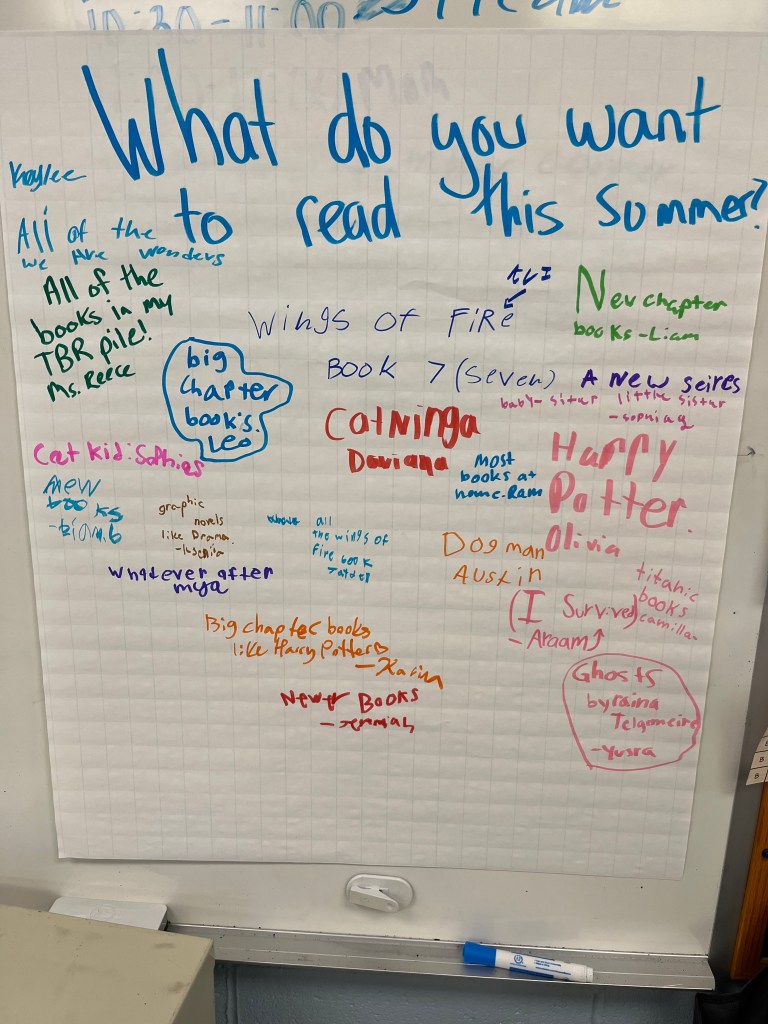

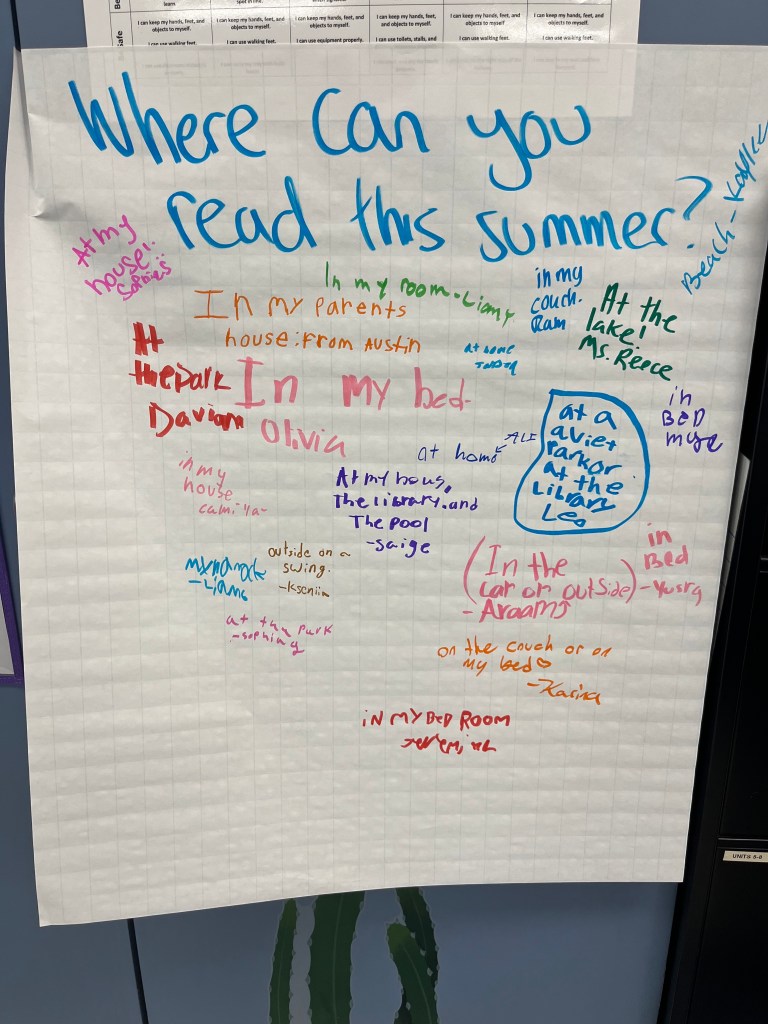
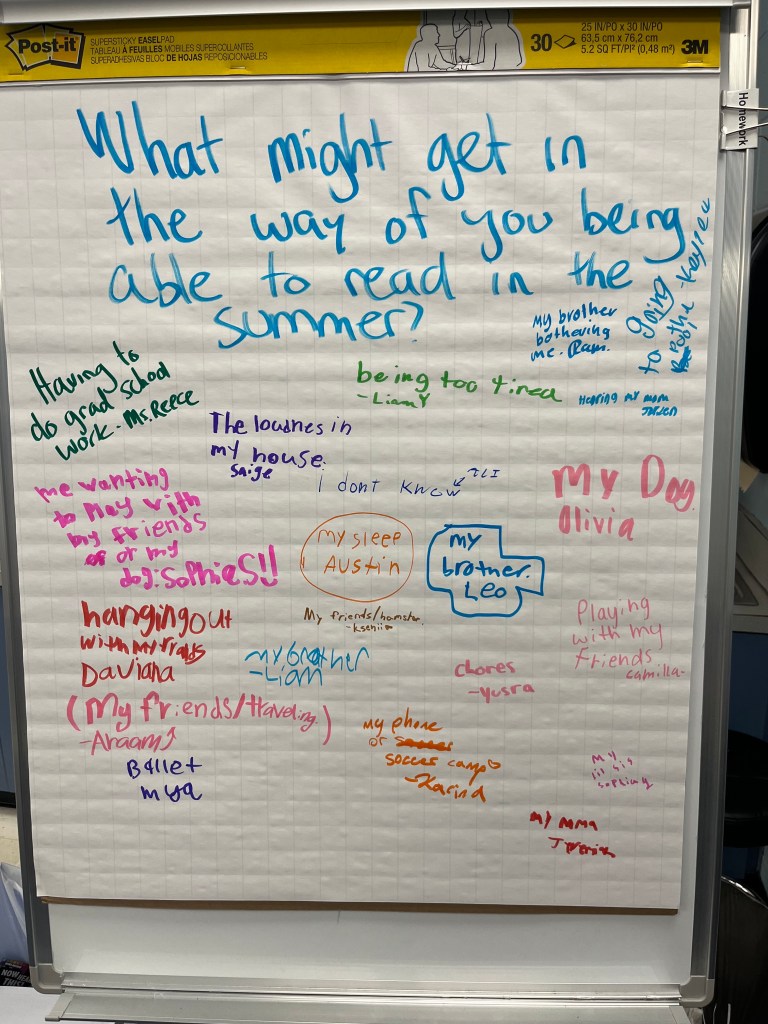
- Invite students to visit you at the beginning of the school year to share their summer reading with you. This is not about having an ice cream party to “reward” students for reading. This is about honoring their authentic reading lives.
Harness all that end-of-year energy and provide the students opportunities to celebrate their reading growth. Celebrate your teaching. And then, enjoy summer.
Slovakia #3: Trusting Readers
Before I went into a 6th grade class to talk to students about reading identity (in English), the teachers were worried. They said, “They won’t know what to say. They’ve never thought about this before. They don’t really read a lot. They won’t have anything to talk about.”
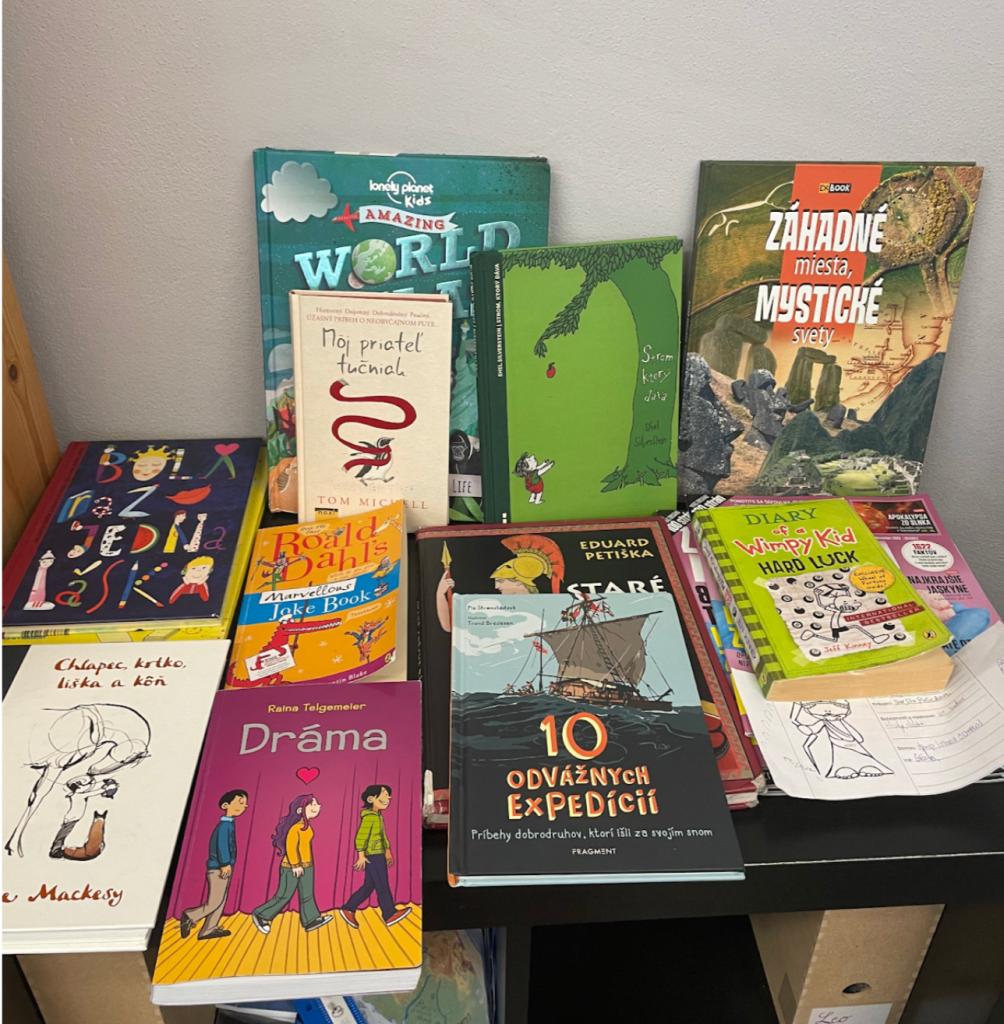
When I walked in the classroom, I noticed that there were copies in Slovak of Diary of a Wimpy Kid and Drama in their small library. I immediately smiled and said, “You are reading those books? So many children in the U.S. love those books. I like them, too.” The students immediately started talking about the books. This authentic connection broke the ice and was a natural beginning to our discussion about reading identity.
I explained that you can start by thinking about how you feel about reading. I modeled, saying that I usually like reading, but that some kinds of books were really hard for me. After a brief silence, one student said, “It’s so boring.” I replied, “ I understand. Reading is boring sometimes.” As soon as they realized that I was genuinely interested in their thoughts and did not expect certain answers, students opened up. Here are some of their comments:
- “I like reading. I like Smile and Drama. But reading in school is bad. We had to read Mark Twain. It was so boring.”
- “I like to read what I’m interested in.”
- “Right now, I am reading fantasy books, but when I am older, I want to read psychology and medical books.”
- “I do not like reading in school.”
- “I used to like reading, but I don’t anymore.”
- “There are so many good books to read now, like fantasy.”
We moved on to talking about their reading habits and what they think about as they read. Again, they had a lot of ideas:
- “I like to read at home, in bed, where it’s quiet.”
- “I don’t have anywhere to read at home. It is always too loud.”
- “I read in the park or in the library.”
- “When I read, I think about what is going to happen at the end. I think of a different ending for the book.”
- “I think about what I am learning.”
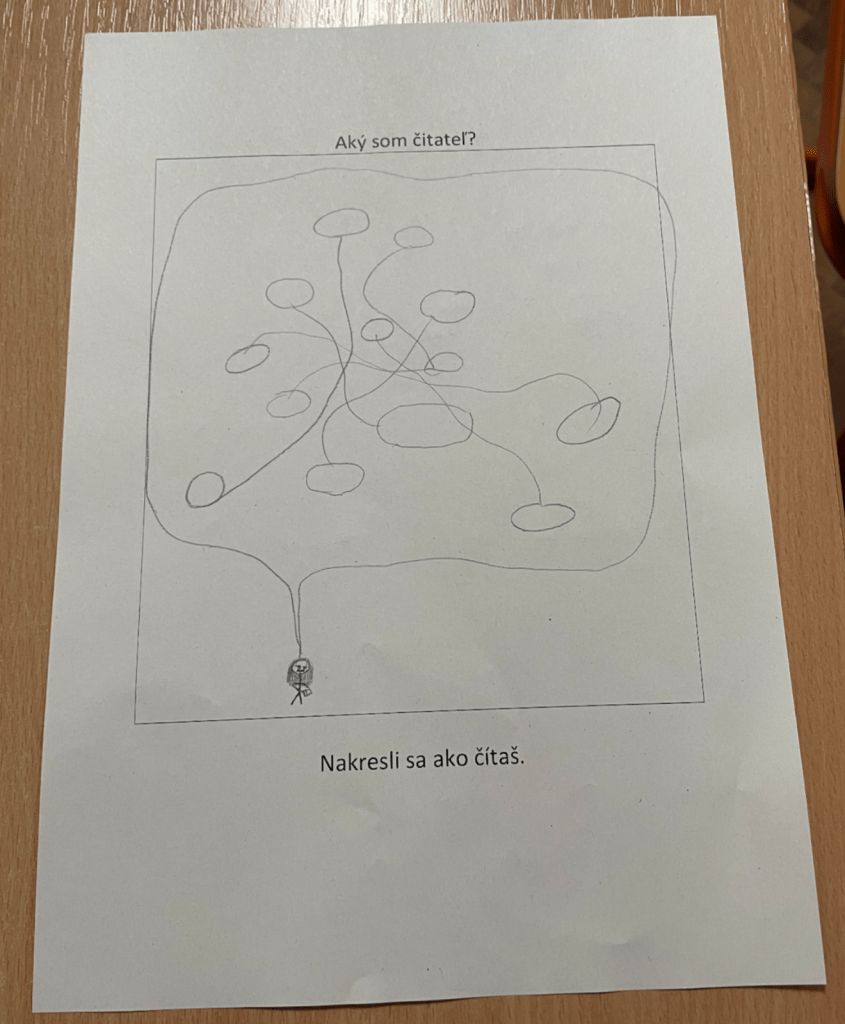
Some students decided to draw themselves reading, some students wrote about their habits, and some did a timeline of themselves as readers. All the students had experiences to share.
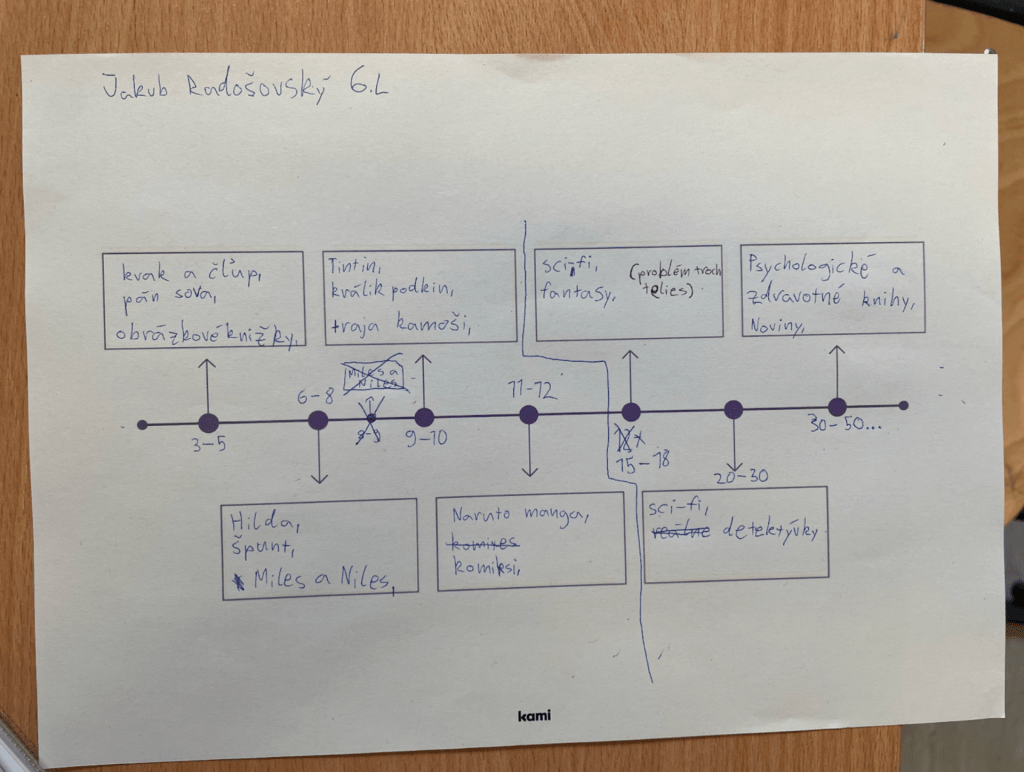

The teachers were delighted. Without even realizing it, they were already developing a reading community. We talked about the implications for their classrooms. The teachers realized that the students have complex reading identities. They were relieved to learn their students do not actually hate reading. They reflected that being a reader does not mean that you always like reading; it can mean that you have strong preferences. They are now thinking about other small shifts that they can make to give students time to read books of their choosing in school.
This is the meaning of trusting readers. Trust that students know themselves well.
Slovakia #2: Teachers Matter
On Monday, I visited a lovely school called Narnia. The school was a warm and welcoming place, with teachers and students chatting in the hallway between periods. In the classroom, teachers had a conversational tone with students, and students felt comfortable answering questions.
I attended a 6th grade reading class, with Daniela translating quietly. As had been explained to me, the reading was all in what we would call a workbook-a softcover textbook with text excerpts and questions. This class was reading an excerpt from a Norse myth. The teacher did what all skilled teachers do- she started by making the topic seem relevant to students. She invited the students to share what they know about the Marvel movies, and the conversation took off. She also shared that she was so interested in myths that she bought some books about myths. The students all wanted to look at the books and wanted to know if they could borrow it. Then students started sharing: “I have a book of myths at home! I’ll bring it tomorrow!” She promised then that they would all have time to read the books the next day, when there were more of them to share.
The rest of the class time was spent with students taking turns reading aloud from the textbook.The small adjustments that the teacher made, without the benefit of a classroom library or the ability to give the students a choice in what topics to explore, helped hook the students into the reading. The act of sharing a little about herself as a reader (I am someone who reads books when I am interested in a topic.), connecting the content to something that interests them (Marvel movies) and offering just a few authentic texts made the difference. Intentional teaching matters, and you can do a lot with just a few books.

Turning Slovakia into the Land of Readers
In Bratislava, Slovakia there is a beautiful bookstore. Books line the walls, and comfortable chairs invite you to settle in and get lost in a book. This reverence for readers is not usually reflected in classrooms, where students tend to read out of textbooks. Last April, at the World Literacy Conference in Oxford, England, I met two educators who are transforming that. They started a group called Land of Readers.
This is how they describe their organization:
Land of Readers is a NGO, whose primary function is to highlight the importance of reading for pleasure. We support adults who work with children and youth, mainly with teachers and schools´ staff. We promote current research in literacy and spread good practice that can be found in schools in Slovakia and abroad. We do this by establishing classroom libraries and providing workshops and materials for teachers.
We also connect different parties that work with reading and literacy in Slovakia. We have strong ties with the biggest bookstore network in Slovakia, and we cooperate with people in the academia, libraries, educators and reading enthusiasts.
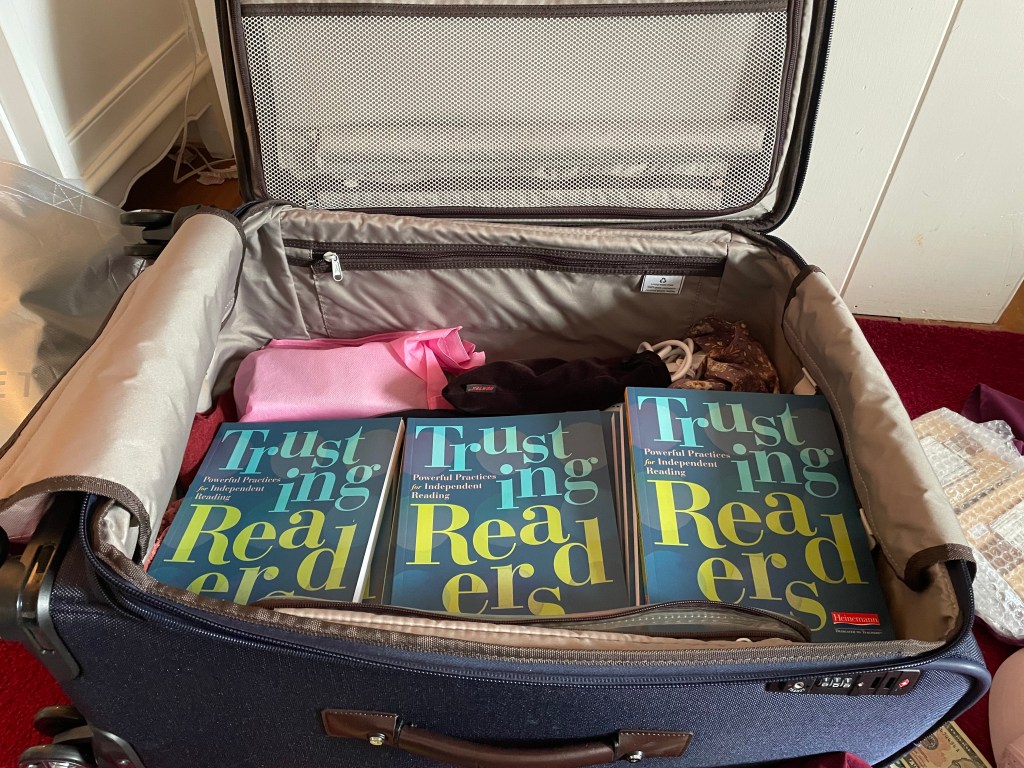
Daniela and Viktoria, the directors of Land of Readers, explained to me that many students think reading is boring or actively dislike reading.The initial focus of their organization was on changing students’ attitudes about reading, and their initial action was deceptively simple. They gave each classroom 20 books and waited to see what would happen. Students started reading, exchanging books, and visiting other classrooms to borrow different books. I was delighted to learn about their approach, and they were delighted to learn about reading identity, which is a new idea for the schools in which they work. They bought Trusting Readers and decided to research the reading identity of students across Slovakia.
For the past year, we have collaborated on monthly online meetings. Daniela shared the responses from the Discovery Conferences she did with students, and we discussed how those insights can support Land of Readers in planning their next steps. Now, a year later, I am going to Bratislava to admire their work. I will get to visit schools, talk to students about reading identity, listen to educators and, of course, spend time at the bookstore.
For the next week, I will be sharing what I am learning. What happens when you focus on giving students books to read for the love of reading? Stay tuned for more blogs and photographs on instagram @trustingreaders
“How’s it going with your reading today?”
Tips for Successful Conferring Part 1
It is late fall. You have finished the mandated assessments, students are following routines, there are no fire drills or eye tests to interrupt you today. Students have books that they are interested in and that they can read, and you are ready to confer. Finally.
You sit down next to a student, observe them for a minute, and then say, “How’s it going with your reading today?” The child, eager to make the most of their time with you, starts to talk. They talk about why they picked the book, the plot twists, what they think is going to happen, the problems that the main character is having, what their sticky notes show…and your mind goes completely blank. You cannot think of a single compliment or next step. Everything you know about skills and strategies, about reading and readers, goes flying out of your head. All you can do is listen, scribble furiously to capture what the child is saying, nod, smile and say, “Good work. Keep reading.”
At the end of independent reading time, you wonder what you actually accomplished today. While the students might have all been engrossed in their books, you know that time with books is not independent reading. The hallmark of independent reading is teacher support.
Does this sound familiar? This is pretty much what happened to me every day when I was a new first grade teacher. It happened to me at the beginning of every school year, when I didn’t yet know the students. It happened to me at the beginning of a new genre study, when I hadn’t internalized the new relevant teaching points.
Here’s the thing. There is no such thing as a failed conference. Reframe your experience.
- You spent time listening. This builds trust. You affirmed for the student that what they have to say is important. You nodded and smiled. That non verbal feedback signals: ”You got this!”
- You realized that you were stuck. This shows that you are a reflective practitioner who always wants to do better. Now you want to focus on being prepared when you confer.
- You took notes, so start by rereading your notes. Notice what the student did and did not say. From what the student did say, you can name a strength. From what the student did not mention, you can teach a next step.
- The next day you sit down next to the same child and say:
“Yesterday, when you were telling me all about your book, I noticed that you talked a lot about the problems the characters were having. In the books that you are reading now, the characters are always running into trouble. Paying attention to problems is a strong point for you! This is what you could do next: You could think about whether a problem is an internal problem, meaning it has to do with how the character feels about something, or an external problem, meaning that something happens to the character. Let’s try that together in your book.”
- Moving forward, you know that you want to prepare before you sit down to confer. (More on that in the next blog.) For now, just keep in mind that you do not have to have the perfect piece of feedback or the perfect strategy in the moment. There is no magical feedback fairy who is going to float by and shower you with just the right words. Give yourself time to analyze what the student is and is not yet doing, practice saying it to yourself, and go back to the student a few minutes later or the same day.
What is your next step for successful conferences during reading?
Give yourself time to reflect after the initial conference with a student.
Prepare.
Then have a second conference during which you name the student strength and next steps.

Trusting Emergent Readers
Read our blog about trusting emergent readers here!
You can learn more by joining us at the 34th annual Literacy for All conference. We will be presenting on November 4 at 2pm.
An Autumnal “Give It a Go”
Each chapter of our book, Trusting Readers, ends with a section titled: Give It a Go. This section invites you to explore the classroom practices that we highlight in that chapter.
October is a good time to pause and reflect on how literacy instruction is progressing. Here is a Give It a Go that you can use right now. Do it by yourself or with a colleague.
Take five or ten minutes at the beginning of a school day to ask yourself:
- How have I shared my reading life so that students see me as a real reader and a model for independent reading?
- What have I learned about the readers in my classroom so far?
- What have the readers learned about themselves?
- Do I see every student in terms of what they CAN do as readers, instead of worrying about what they CANNOT do?
- How have the students already grown?
- How have they grown in terms of reading skills & strategies?
- How have they grown as readers?
Reflecting on these questions does not require anything but your thoughtfulness and your ability to see your teaching in terms of what you HAVE done, not in terms of what you HAVE NOT done. (You can, of course, study your conferring notes,lesson plans, and assessment data as you do this.)
Now, list for yourself (or ask your colleague to help you) which of these aspects of literacy instruction you are doing well. Yes, give yourself a compliment. Or two. Or three. Be specific.
And now, name what you would like to do next. Are there a few students you’d like to get to know better? Do you want to invite students to reflect on how they’ve changed as readers? Is there one student who would benefit from getting a curated book stack from you? Do you want to share more about your reading life?
Trust yourself to contemplate and then act. Let us know how it goes!
Upcoming Workshops
Trusting Readers has a variety of upcoming presentations and workshops. We encourage you to attend!
We have a series of 4 workshops with the Chapters International Learning Beyond series in November. Learn more here!
Join Trusting Readers for a 2 day workshop on Dec 4 and 6 from 6:30-7:45pm EST. Register here!
Hannah will be presenting at the Community Learning Workshop Days, on Thursday, January 18, hosted by Paramus Public Schools and Littogether Learning Communities. See more information here.
 Trusting Readers